
It’s a question we hear often from patients who have lost a tooth: “Is an implant really worth it, or can I just leave the gap?” Maybe you’ve been living with a missing tooth for a while. Maybe a cracked or badly damaged tooth needs to come out soon. Either way, feeling unsure about what comes next is completely normal.
Here’s the short answer. For most healthy adults, dental implants are the closest thing to a natural tooth that modern dentistry can offer. Below, Dr. Arash Roham and our team walk through how they work, who they’re right for, and what the process actually feels like.
What Are Dental Implants?
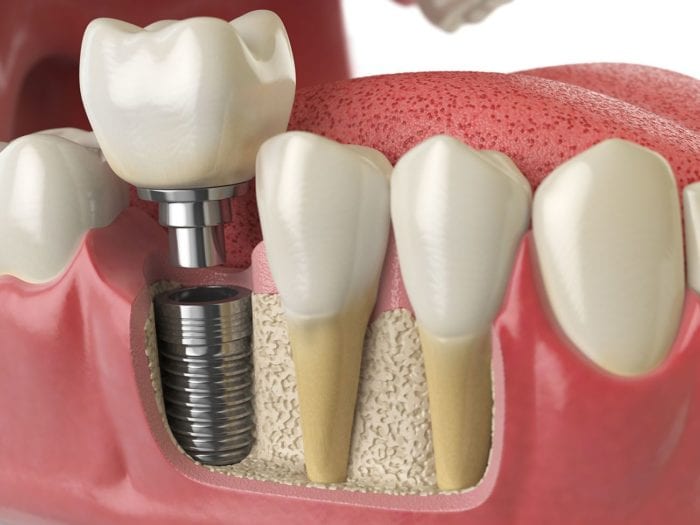
A dental implant replaces both the part of the tooth you can see and the root underneath. It has three pieces:
- The implant post. A small titanium post placed in the jawbone that acts as a new tooth root.
- The abutment. A small connector that attaches to the post and holds your new tooth in place.
- The crown. A custom-made tooth shaped and shaded to blend in with your natural smile.
Over a few months, the jawbone bonds to the post through a process called osseointegration. In plain terms, the bone grows snugly around the implant and locks it in place. That’s why implants feel so stable when you bite and chew. The Cleveland Clinic offers a helpful overview of how this works if you’d like to read more.
Once you understand what an implant is, the next question is usually whether replacing a tooth is necessary at all.
Why Replace a Missing Tooth at All?
A gap can seem like a cosmetic issue, especially if it’s toward the back of your mouth. But your teeth work as a team, and losing one affects the rest. Here’s what can happen over time:
- Bone loss. Without a root to stimulate it, the jawbone in that spot slowly shrinks.
- Shifting teeth. Neighboring teeth can drift or tilt into the open space, which changes your bite.
- Extra wear. The teeth you still have take on more chewing pressure.
- Changes in facial shape. Ongoing bone loss can make the lower face look sunken.
Dental implants are the only tooth replacement that sits in the bone itself. That’s why they help protect your jaw in a way that bridges and dentures can’t, as the American Association of Oral and Maxillofacial Surgeons explains.
Are Dental Implants Right for You?
Good candidates for an implant usually have:
- Healthy gums with no active gum disease
- Enough jawbone to support the post, or openness to a bone graft if needed
- Good overall health
- A commitment to brushing, flossing, and regular dental visits
Some situations call for extra planning. Smoking, uncontrolled diabetes, and certain medications can slow healing. That doesn’t automatically rule you out. It simply means Dr. Roham will review your health history, take digital X-rays, and talk honestly with you about what makes sense for your mouth.
Every patient is different, so a consultation is the best way to know for sure. Here’s what happens if you decide to move forward.
What Happens During the Implant Process?
Many people picture one long, difficult appointment. In reality, dental implants are placed in stages, with healing time built in between each step.
- Consultation and imaging. We examine your teeth and gums, take X-rays, and map out a plan together.
- Placing the post. Your mouth is fully numbed. Most patients describe the feeling as pressure rather than pain, and placing a single implant typically takes one to two hours.
- Healing. Over the next three to six months, the bone fuses with the post. You may wear a temporary tooth during this time so you’re never without a smile.
- Attaching the crown. Once healing is complete, we attach the abutment and your custom crown.
Most patients return to their normal routine within a day or two of placement. Mild soreness is common and usually manageable with over-the-counter pain relievers.
Will Getting An Implant Hurt?
If this is what’s on your mind, you’re not alone. Dental anxiety is real, and oral surgery can sound intimidating. The good news is that local anesthesia keeps you comfortable during the procedure, and we never rush.
Our team takes comfort seriously. Patients often tell us someone stayed with them through every step of the implant process, explaining what was happening and checking in along the way. If you feel nervous, just let us know, and we’ll talk through ways to help you feel more at ease.
How Long Do Dental Implants Last?
With good care, the implant post can last for decades, and often a lifetime. The crown on top may need to be replaced after 10 to 15 years because of normal wear.
Caring for an implant is a lot like caring for a natural tooth. Brush twice a day, floss daily, and keep up with professional cleanings every six months. The American Dental Association’s MouthHealthy site has more tips on long-term implant care.
Dental Implants vs. Bridges vs. Dentures
Implants aren’t the only option, and the right choice depends on your situation. Here’s a quick comparison:
- Dental implants are anchored in the bone, don’t affect neighboring teeth, and can last a lifetime.
- Bridges use the teeth on either side of the gap for support, which means reshaping those healthy teeth.
- Dentures are removable and often the most budget-friendly choice, but they can shift while eating and don’t prevent bone loss.
You can see the full range of tooth replacement and restorative care we provide on our services page.
Trusted Implant Care Close to Home
Healthy Smiles has cared for families in La Crescenta and the surrounding communities for years. We also welcome patients from Glendale, Montrose, Tujunga, and La Cañada Flintridge who want a friendly, familiar team guiding them through treatment.
We know a decision like this is personal. That’s why Dr. Roham takes time to answer every question, explain your options clearly, and help you choose what fits your health, your comfort, and your goals.
Ready to Talk About Replacing a Missing Tooth?
If you’re in La Crescenta or Glendale and have been living with a missing tooth, you don’t have to figure it out alone. A consultation is a relaxed, no-pressure conversation about what’s possible for your smile.
Schedule your implant consultation with Dr. Roham today. We look forward to seeing you.
